Mind Mapsमाइंड मैप्स › Geographyभूगोल
soils — mind mapमाइंड मैप
Original study maps by Rishabh Singh. Read dated facts in their exam-year context. Sources & corrections.ऋषभ सिंह के मूल अध्ययन मानचित्र। पुराने तथ्यों को संबंधित परीक्षा वर्ष के संदर्भ में पढ़ें। स्रोत और सुधार।
28 branches and entriesशाखाएँ और बिंदु · 1 sheet(s)शीट
See the original map layoutमूल मानचित्र का स्वरूप देखें
Tap the image to open its full preview. Read individual branches below for comfortable revision.पूरा पूर्वावलोकन खोलने के लिए चित्र पर टैप करें। आसानी से पढ़ने के लिए नीचे शाखाएँ देखें।
Read the branchesशाखाएँ पढ़ें
soils
soils
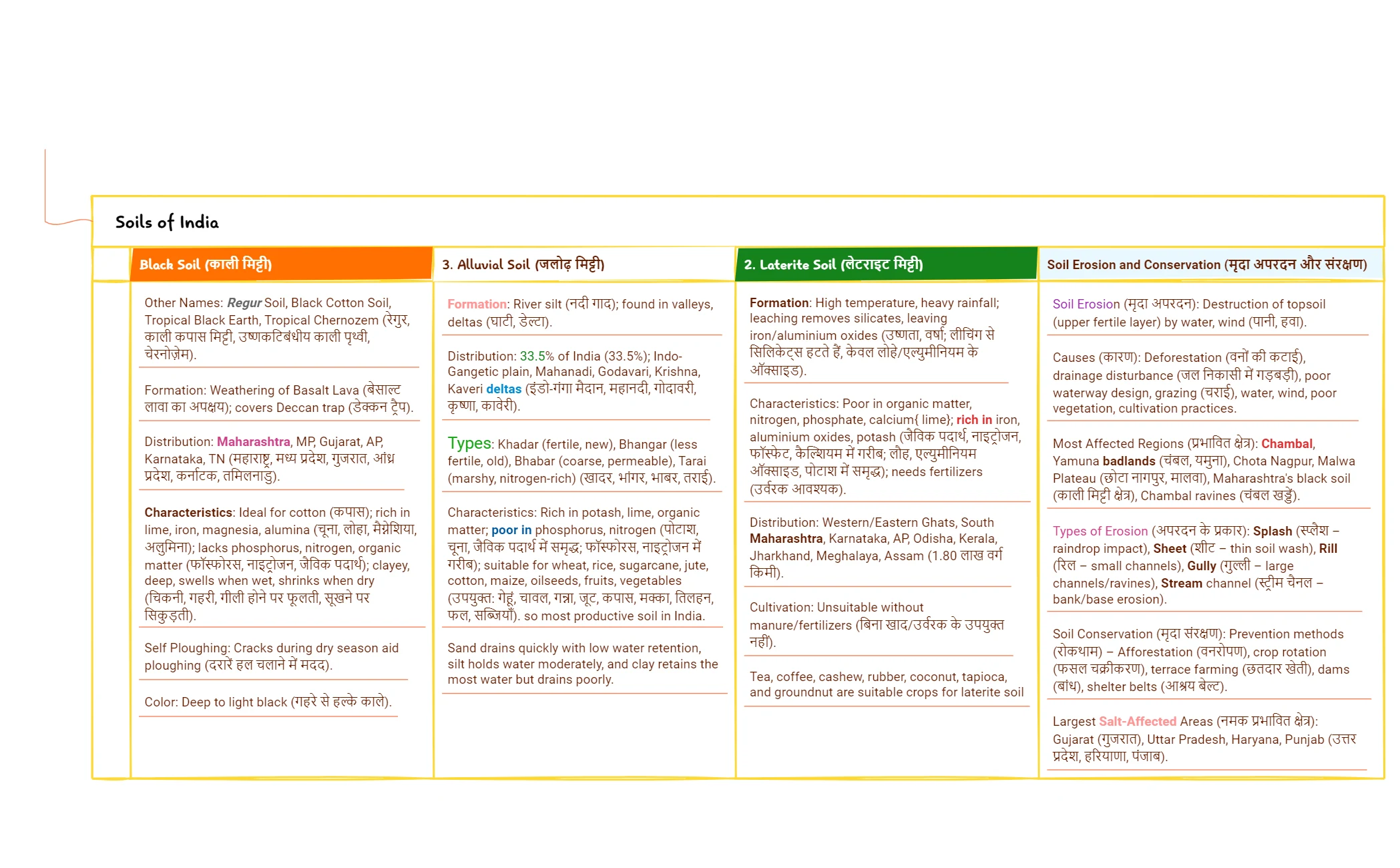
Soils of India
Black Soil (काली मिट्टी)
Other Names: Regur Soil, Black Cotton Soil, Tropical Black Earth, Tropical Chernozem (रेगुर, काली कपास मिट्टी, उष्णकटिबंधीय काली पृथ्वी, चेरनोज़ेम).
Formation: Weathering of Basalt Lava (बेसाल्ट लावा का अपक्षय); covers Deccan trap (डेक्कन ट्रैप).
Distribution: Maharashtra, MP, Gujarat, AP, Karnataka, TN (महाराष्ट्र, मध्य प्रदेश, गुजरात, आंध्र प्रदेश, कर्नाटक, तमिलनाडु).
Characteristics: Ideal for cotton (कपास); rich in lime, iron, magnesia, alumina (चूना, लोहा, मैग्नेशिया, अलुमिना); lacks phosphorus, nitrogen, organic matter (फॉस्फोरस, नाइट्रोजन, जैविक पदार्थ); clayey, deep, swells when wet, shrinks when dry (चिकनी, गहरी, गीली होने पर फूलती, सूखने पर सिकुड़ती).
Self Ploughing: Cracks during dry season aid ploughing (दरारें हल चलाने में मदद).
Color: Deep to light black (गहरे से हल्के काले).
3. Alluvial Soil (जलोढ़ मिट्टी)
Formation: River silt (नदी गाद); found in valleys, deltas (घाटी, डेल्टा).
Distribution: 33.5% of India (33.5%); Indo-Gangetic plain, Mahanadi, Godavari, Krishna, Kaveri deltas (इंडो-गंगा मैदान, महानदी, गोदावरी, कृष्णा, कावेरी).
Types: Khadar (fertile, new), Bhangar (less fertile, old), Bhabar (coarse, permeable), Tarai (marshy, nitrogen-rich) (खादर, भांगर, भाबर, तराई).
Characteristics: Rich in potash, lime, organic matter; poor in phosphorus, nitrogen (पोटाश, चूना, जैविक पदार्थ में समृद्ध; फॉस्फोरस, नाइट्रोजन में गरीब); suitable for wheat, rice, sugarcane, jute, cotton, maize, oilseeds, fruits, vegetables (उपयुक्त: गेहूं, चावल, गन्ना, जूट, कपास, मक्का, तिलहन, फल, सब्जियाँ). so most productive soil in India.
Sand drains quickly with low water retention, silt holds water moderately, and clay retains the most water but drains poorly.
2. Laterite Soil (लेटराइट मिट्टी)
Formation: High temperature, heavy rainfall; leaching removes silicates, leaving iron/aluminium oxides (उष्णता, वर्षा; लीचिंग से सिलिकेट्स हटते हैं, केवल लोहे/एल्युमीनियम के ऑक्साइड).
Characteristics: Poor in organic matter, nitrogen, phosphate, calcium{ lime}; rich in iron, aluminium oxides, potash (जैविक पदार्थ, नाइट्रोजन, फॉस्फेट, कैल्शियम में गरीब; लौह, एल्युमीनियम ऑक्साइड, पोटाश में समृद्ध); needs fertilizers (उर्वरक आवश्यक).
Distribution: Western/Eastern Ghats, South Maharashtra, Karnataka, AP, Odisha, Kerala, Jharkhand, Meghalaya, Assam (1.80 लाख वर्ग किमी).
Cultivation: Unsuitable without manure/fertilizers (बिना खाद/उर्वरक के उपयुक्त नहीं).
Tea, coffee, cashew, rubber, coconut, tapioca, and groundnut are suitable crops for laterite soil
Soil Erosion and Conservation (मृदा अपरदन और संरक्षण)
Soil Erosion (मृदा अपरदन): Destruction of topsoil (upper fertile layer) by water, wind (पानी, हवा).
Causes (कारण): Deforestation (वनों की कटाई), drainage disturbance (जल निकासी में गड़बड़ी), poor waterway design, grazing (चराई), water, wind, poor vegetation, cultivation practices.
Most Affected Regions (प्रभावित क्षेत्र): Chambal, Yamuna badlands (चंबल, यमुना), Chota Nagpur, Malwa Plateau (छोटा नागपुर, मालवा), Maharashtra's black soil (काली मिट्टी क्षेत्र), Chambal ravines (चंबल खड्डें).
Types of Erosion (अपरदन के प्रकार): Splash (स्प्लैश – raindrop impact), Sheet (शीट – thin soil wash), Rill (रिल – small channels), Gully (गुल्ली – large channels/ravines), Stream channel (स्ट्रीम चैनल – bank/base erosion).
Soil Conservation (मृदा संरक्षण): Prevention methods (रोकथाम) – Afforestation (वनरोपण), crop rotation (फसल चक्रीकरण), terrace farming (छतदार खेती), dams (बांध), shelter belts (आश्रय बेल्ट).
Largest Salt-Affected Areas (नमक प्रभावित क्षेत्र): Gujarat (गुजरात), Uttar Pradesh, Haryana, Punjab (उत्तर प्रदेश, हरियाणा, पंजाब).