Mind Mapsमाइंड मैप्स › Geographyभूगोल
Energy Resources — mind mapमाइंड मैप
Original study maps by Rishabh Singh. Read dated facts in their exam-year context. Sources & corrections.ऋषभ सिंह के मूल अध्ययन मानचित्र। पुराने तथ्यों को संबंधित परीक्षा वर्ष के संदर्भ में पढ़ें। स्रोत और सुधार।
53 branches and entriesशाखाएँ और बिंदु · 1 sheet(s)शीट
See the original map layoutमूल मानचित्र का स्वरूप देखें
Tap the image to open its full preview. Read individual branches below for comfortable revision.पूरा पूर्वावलोकन खोलने के लिए चित्र पर टैप करें। आसानी से पढ़ने के लिए नीचे शाखाएँ देखें।
Read the branchesशाखाएँ पढ़ें
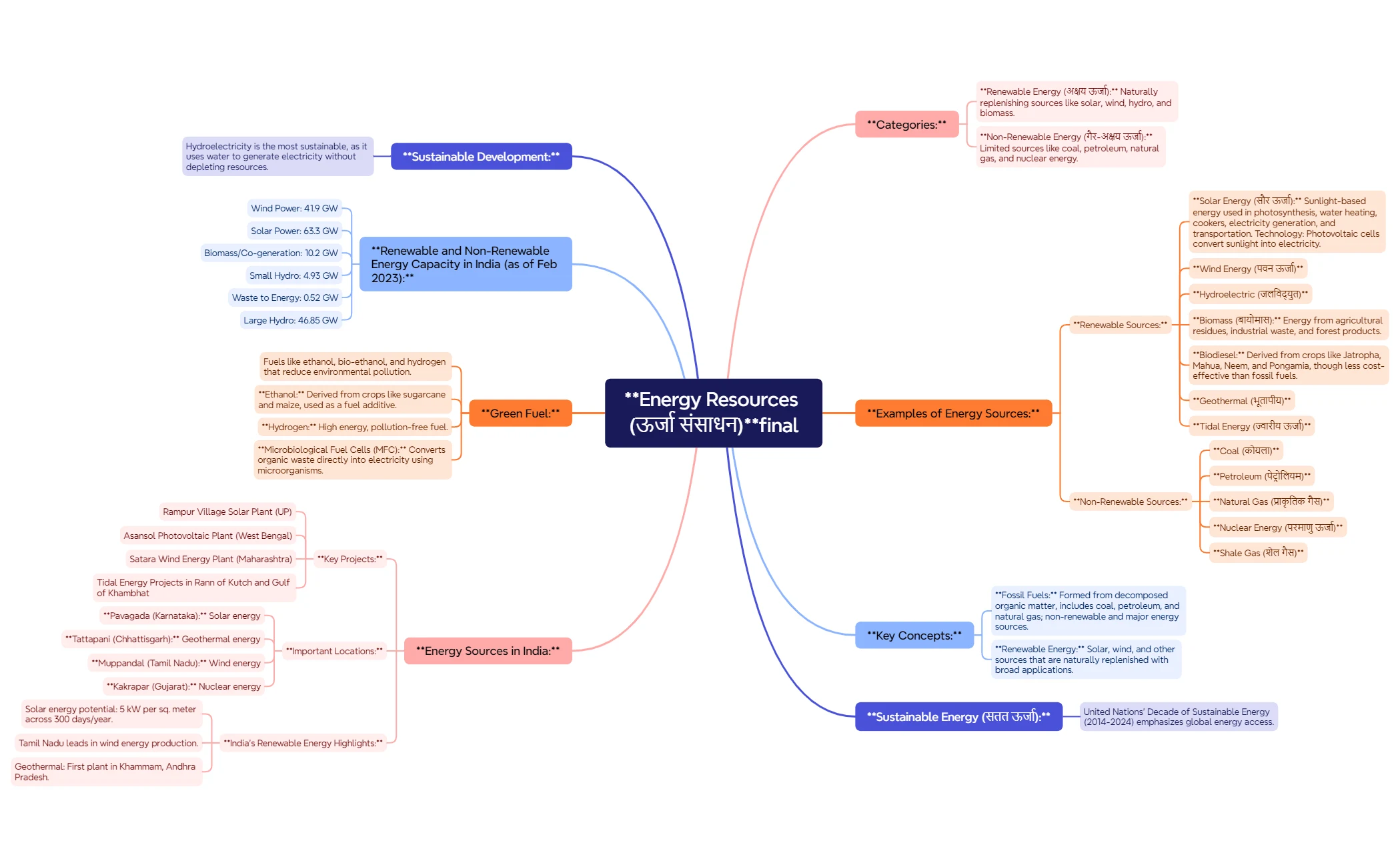
Energy Resources (ऊर्जा संसाधन)final
Energy Resources (ऊर्जा संसाधन)final
Categories:
Renewable Energy (अक्षय ऊर्जा): Naturally replenishing sources like solar, wind, hydro, and biomass.
Non-Renewable Energy (गैर-अक्षय ऊर्जा): Limited sources like coal, petroleum, natural gas, and nuclear energy.
Examples of Energy Sources:
Renewable Sources:
Solar Energy (सौर ऊर्जा): Sunlight-based energy used in photosynthesis, water heating, cookers, electricity generation, and transportation. Technology: Photovoltaic cells convert sunlight into electricity.
Wind Energy (पवन ऊर्जा)
Hydroelectric (जलविद्युत)
Biomass (बायोमास): Energy from agricultural residues, industrial waste, and forest products.
Biodiesel: Derived from crops like Jatropha, Mahua, Neem, and Pongamia, though less cost-effective than fossil fuels.
Geothermal (भूतापीय)
Tidal Energy (ज्वारीय ऊर्जा)
Non-Renewable Sources:
Coal (कोयला)
Petroleum (पेट्रोलियम)
Natural Gas (प्राकृतिक गैस)
Nuclear Energy (परमाणु ऊर्जा)
Shale Gas (शेल गैस)
Key Concepts:
Fossil Fuels: Formed from decomposed organic matter, includes coal, petroleum, and natural gas; non-renewable and major energy sources.
Renewable Energy: Solar, wind, and other sources that are naturally replenished with broad applications.
Sustainable Energy (सतत ऊर्जा):
United Nations' Decade of Sustainable Energy (2014-2024) emphasizes global energy access.
Energy Sources in India:
Key Projects:
Rampur Village Solar Plant (UP)
Asansol Photovoltaic Plant (West Bengal)
Satara Wind Energy Plant (Maharashtra)
Tidal Energy Projects in Rann of Kutch and Gulf of Khambhat
Important Locations:
Pavagada (Karnataka): Solar energy
Tattapani (Chhattisgarh): Geothermal energy
Muppandal (Tamil Nadu): Wind energy
Kakrapar (Gujarat): Nuclear energy
India’s Renewable Energy Highlights:
Solar energy potential: 5 kW per sq. meter across 300 days/year.
Tamil Nadu leads in wind energy production.
Geothermal: First plant in Khammam, Andhra Pradesh.
Green Fuel:
Fuels like ethanol, bio-ethanol, and hydrogen that reduce environmental pollution.
Ethanol: Derived from crops like sugarcane and maize, used as a fuel additive.
Hydrogen: High energy, pollution-free fuel.
Microbiological Fuel Cells (MFC): Converts organic waste directly into electricity using microorganisms.
Renewable and Non-Renewable Energy Capacity in India (as of Feb 2023):
Wind Power: 41.9 GW
Solar Power: 63.3 GW
Biomass/Co-generation: 10.2 GW
Small Hydro: 4.93 GW
Waste to Energy: 0.52 GW
Large Hydro: 46.85 GW
Sustainable Development:
Hydroelectricity is the most sustainable, as it uses water to generate electricity without depleting resources.