Mind Mapsमाइंड मैप्स › Environmentपर्यावरण
Forest and Wildlife — mind mapमाइंड मैप
Original study maps by Rishabh Singh. Read dated facts in their exam-year context. Sources & corrections.ऋषभ सिंह के मूल अध्ययन मानचित्र। पुराने तथ्यों को संबंधित परीक्षा वर्ष के संदर्भ में पढ़ें। स्रोत और सुधार।
234 branches and entriesशाखाएँ और बिंदु · 1 sheet(s)शीट
See the original map layoutमूल मानचित्र का स्वरूप देखें
Tap the image to open its full preview. Read individual branches below for comfortable revision.पूरा पूर्वावलोकन खोलने के लिए चित्र पर टैप करें। आसानी से पढ़ने के लिए नीचे शाखाएँ देखें।
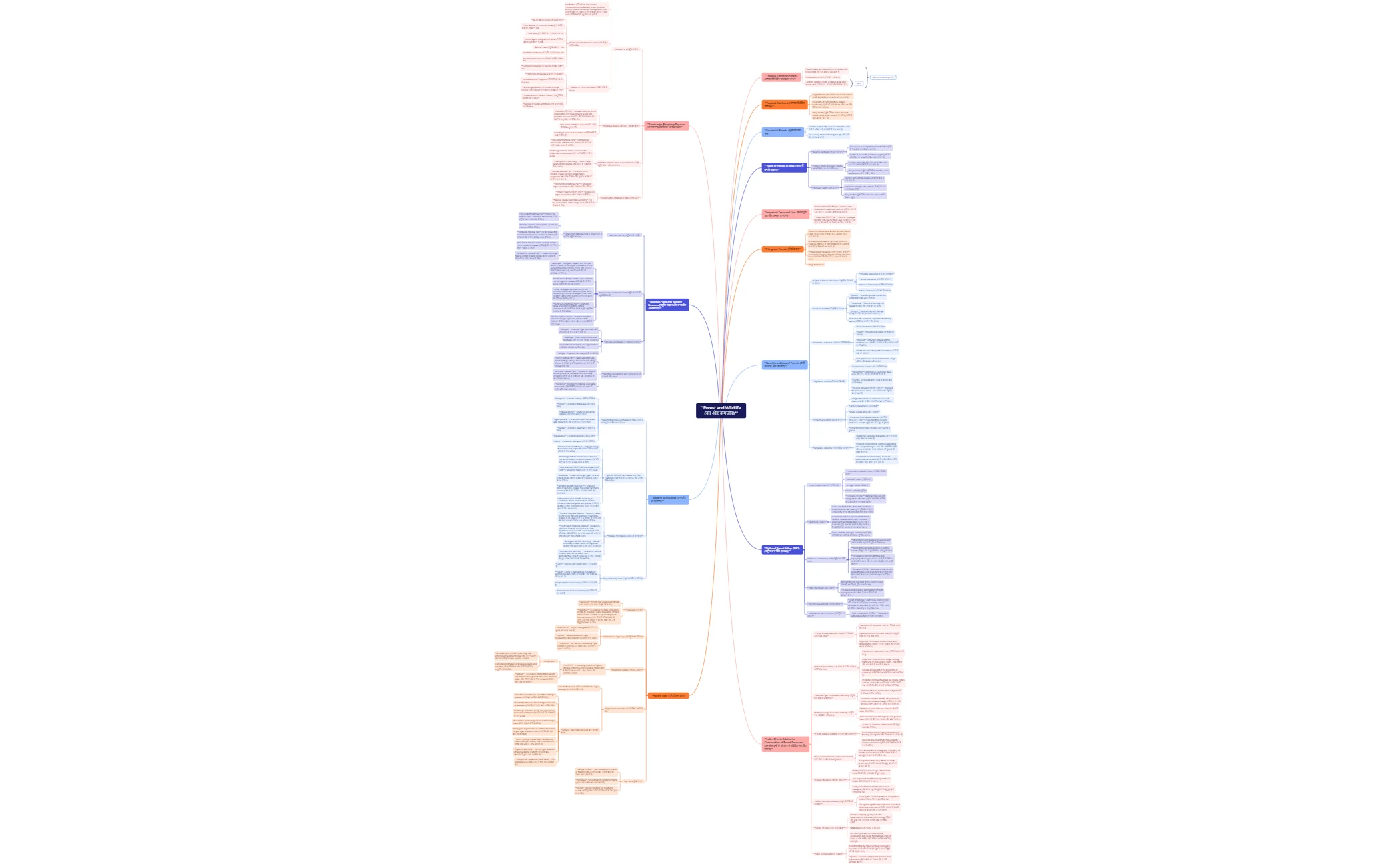
Read the branchesशाखाएँ पढ़ें
Forest and Wildlife (वन और वन्यजीव)
Forest and Wildlife (वन और वन्यजीव)
Tropical Evergreen Forests (उष्णकटिबंधीय सदाबहार वन)
Found in areas with over 200 cm of rainfall (200 सेमी से अधिक वर्षा वाले क्षेत्रों में पाया जाता है)
Temperature: 15-30°C (तापमान: 15-30°C)
Location: Western Ghats, Andaman & Nicobar Islands (स्थल: पश्चिमी घाट, अंडमान और निकोबार द्वीप)
up,15
Tropical Rainforest (उष्णकटिबंधीय वर्षावन)
Largest biome with 23.5°N and 23.5°S latitude (सबसे बड़ा बायोम, 23.5°N और 23.5°S अक्षांश)
Covers 8% of Earth's surface, 50% of biodiversity (पृथ्वी की सतह का 8% और 50% जैव विविधता का आवरण)
Key Plants (प्रमुख पौधे): Shade-tolerant shrubs, herbs, small trees (छाया-सहिष्णु झाड़ियाँ, जड़ी-बूटियाँ, छोटे पेड़)
Equatorial Forests (भूमध्यरेखीय वन)
Found in regions with over 200 cm rainfall (200 सेमी से अधिक वर्षा वाले क्षेत्रों में पाया जाता है)
Tall, closely set trees forming canopy (लंबे, घने पेड़ जो छत्र बनाते हैं)
Types of Forests in India (भारत में वन के प्रकार)
Amazon Rainforest (अमेज़न वर्षावन)
Also known as "Lungs of the Planet Earth" (पृथ्वी के फेफड़े के रूप में जाना जाता है)
Produces over 20% of Earth's oxygen (पृथ्वी के ऑक्सीजन का 20% से अधिक उत्पन्न करता है)
Tropical Moist Deciduous Forests (उष्णकटिबंधीय नम पर्णपाती वन)
Found in areas with 100-200 cm rainfall (100-200 सेमी वर्षा वाले क्षेत्रों में पाया जाता है)
Key Species (प्रमुख प्रजातियाँ): Bamboo, Teak, Sandalwood (बांस, सागौन, चंदन)
Montane Forests (पर्वतीय वन)
Found in high altitude areas (ऊंचाई वाले क्षेत्रों में पाया जाता है)
Vegetation changes with altitude (ऊंचाई के साथ वनस्पति बदलती है)
Key Plants (प्रमुख पौधे): Pine, Fir, Spruce (चीड़, देवदार, स्प्रूस)
Important Trees and Uses (महत्वपूर्ण वृक्ष और उनका उपयोग)
Red Sanders (लाल चंदन): Found in South India, used in traditional medicine (दक्षिण भारत में पाया जाता है, पारंपरिक चिकित्सा में उपयोग)
Texas Tree (टेक्सास वृक्ष): Found in Himalayas, used for anti-cancer drug Taxol (हिमालय में पाया जाता है, कैंसररोधी दवा टैक्सोल के लिए उपयोगी)
Mangrove Forests (मैन्ग्रोव वन)
Found in Andaman and Nicobar Islands, Odisha coast (अंडमान और निकोबार द्वीप, ओडिशा तट में पाया जाता है)
Acts as a barrier against cyclones, protects coastline (चक्रवातों के खिलाफ बाधा के रूप में कार्य करता है, तटरेखा की रक्षा करता है)
Bhitar Kanika Mangrove (भितर कणिका मैन्ग्रोव): Famous for mangrove forests, Ramsar site since 2002 (मैन्ग्रोव वनों के लिए प्रसिद्ध, 2002 से रामसर स्थल)
image from crack
Benefits and Uses of Forests (वनों के लाभ और उपयोग)
Types of Natural Resources (प्राकृतिक संसाधनों के प्रकार)
Potential Resources (संभावित संसाधन)
Actual Resources (वास्तविक संसाधन)
Reserve Resources (आरक्षित संसाधन)
Stock Resources (भंडारण संसाधन)
Cultural Benefits (सांस्कृतिक लाभ)
Spiritual: Provides spiritual connection (आध्यात्मिक संबंध प्रदान करता है)
Educational: Source of learning and research (शिक्षा और अनुसंधान का स्रोत)
Cultural: Supports cultural heritage (सांस्कृतिक विरासत का समर्थन करता है)
Creation of Literature: Inspiration for literary works (साहित्यिक कार्यों के लिए प्रेरणा)
Productive Activities (उत्पादक गतिविधियाँ)
Fruit Production (फल उत्पादन)
Raisin: Production of raisins (किशमिश का उत्पादन)
Alkaloid: Extraction of alkaloids for medicinal use (औषधीय उपयोग के लिए क्षारीय पदार्थों का निष्कर्षण)
Rubber: Harvesting rubber from trees (पेड़ों से रबर का उत्पादन)
Drugs: Source of various medicinal drugs (विभिन्न औषधीय दवाओं का स्रोत)
Regulatory Actions (नियामक क्रियाएँ)
Temperature Control (तापमान नियंत्रण)
Absorption: Absorbs CO₂ and other gases (CO₂ और अन्य गैसों का अवशोषण करता है)
Control on Drought and Flood (सूखा और बाढ़ पर नियंत्रण)
Balance of Gases (गैसों का संतुलन): Maintains balance of CO₂ and O₂ (CO₂ और O₂ का संतुलन बनाए रखता है)
Regulation of Bio-Geochemical Cycle of Carbon (कार्बन के जैव-रासायनिक चक्र का नियमन)
Protective Benefits (संरक्षण लाभ)
Land Conservation (भूमि संरक्षण)
Water Conservation (जल संरक्षण)
Protection from Natural Disasters (प्राकृतिक आपदाओं से सुरक्षा): Protection from drought, wind, cold, sunlight (सूखा, हवा, ठंड, धूप से सुरक्षा)
Protection from Noise Pollution (ध्वनि प्रदूषण से सुरक्षा)
Renewable Resource (नवीकरणीय संसाधन)
Forests can be reused sustainably (वनों का सतत् दोहन किया जा सकता है)
Enhances environmental quality by absorbing CO₂ and producing O₂ (CO₂ को अवशोषित करके और O₂ का उत्पादन करके पर्यावरण की गुणवत्ता में सुधार करता है)
Considered as "Green Metal" due to its environmental benefits (इसके पर्यावरणीय लाभों के कारण इसे "ग्रीन मेटल" माना जाता है)
National Forest Policy (1952) (राष्ट्रीय वन नीति (1952))
Forest Classification (वन वर्गीकरण)
Protected/Conserved Forests (संरक्षित/संरक्षित वन)
National Forests (राष्ट्रीय वन)
Village Forests (ग्राम वन)
Tree Lands (वृक्ष भूमि)
Exclusion (अपवाद): National Parks are not categorized as forests (राष्ट्रीय उद्यानों को वनों के रूप में वर्गीकृत नहीं किया गया है)
Objectives (उद्देश्य)
Cover one-third (33%) of the total land area under forest or tree cover (कुल भूमि क्षेत्र का एक-तिहाई (33%) वन या वृक्ष आवरण के तहत कवर करना)
In mountain and hilly regions: Maintain two-thirds of the area under cover to prevent erosion and land degradation (पहाड़ी क्षेत्रों में: कटाव और भूमि क्षरण को रोकने के लिए क्षेत्र के दो-तिहाई हिस्से को आवरण के तहत बनाए रखना)
Ensure stability of fragile ecosystems (नाजुक पारिस्थितिकी प्रणालियों की स्थिरता सुनिश्चित करना)
National Forest Policy 1988 (राष्ट्रीय वन नीति 1988)
Afforestation and Wasteland Development (वनरोपण और अनुपयोगी भूमि का विकास)
Reforestation and Replantation in Existing Forests (मौजूदा वनों में पुनर्वनीकरण और पुनरोपण)
Encouraging Wood's Substitute and Supplying Other Types of Fuel (लकड़ी के विकल्प को प्रोत्साहित करना और अन्य प्रकार के ईंधन की आपूर्ति करना)
Exclusion (अपवाद): Wide use of insecticides and pesticides is not promoted (कीटनाशकों और कीटनाशकों के व्यापक उपयोग को बढ़ावा नहीं दिया गया है)
Main Objectives (मुख्य उद्देश्य)
Afforestation of one-third of the country's land (देश की एक-तिहाई भूमि का वनीकरण)
Encouragement of public participation in forest management (वन प्रबंधन में जन भागीदारी को प्रोत्साहन देना)
Recent Developments (हालिया विकास)
Draft of National Forest Policy 2018 (राष्ट्रीय वन नीति 2018 का मसौदा): Cleared by various ministries on November 21, 2019 (21 नवंबर 2019 को विभिन्न मंत्रालयों द्वारा मंजूर किया गया)
International Day of Forests (अंतर्राष्ट्रीय वन दिवस)
2018 Theme (2018 का थीम): "Forests and Sustainable Cities" (वन और सतत शहर)
Indian Efforts Related to Conservation of Forest Resources (वन संसाधनों के संरक्षण से संबंधित भारतीय प्रयास)
Forest (Conservation) Act 1980 (वन (संरक्षण) अधिनियम 1980)
Enacted on 27 December 1980 (27 दिसंबर 1980 को लागू)
Implemented on 25 October 1980 (25 अक्टूबर 1980 को लागू किया गया)
Objective: To conserve forests and prevent deforestation (उद्देश्य: वनों का संरक्षण और वनों की कटाई को रोकना)
Wildlife (Protection) Act 1972 (वन्यजीव (संरक्षण) अधिनियम 1972)
Enacted on 9 September 1972 (9 सितंबर 1972 को लागू)
Objective: Protection from illegal hunting, trafficking of wild animals (उद्देश्य: अवैध शिकार और वन्य जीवों के तस्करी से संरक्षण)
Includes provisions for the protection of wildlife (वन्यजीवों के संरक्षण के लिए प्रावधान शामिल हैं)
Prohibited hunting of animals like Gharial, Indian wild ass, wild buffalo (घड़ियाल, भारतीय जंगली गधा, जंगली भैंस जैसे जानवरों का शिकार निषिद्ध)
National Tiger Conservation Authority (राष्ट्रीय बाघ संरक्षण प्राधिकरण)
Established for the conservation of tigers (बाघों के संरक्षण के लिए स्थापित)
Functions under the Ministry of Environment, Forests, and Climate Change (पर्यावरण, वन और जलवायु परिवर्तन मंत्रालय के अंतर्गत कार्य करता है)
National Ganga River Basin Authority (राष्ट्रीय गंगा नदी बेसिन प्राधिकरण)
Established on 20 February 2009 (20 फरवरी 2009 को स्थापित)
Aims to conserve and manage the Ganga River Basin (गंगा नदी बेसिन का संरक्षण और प्रबंधन करना)
Forest Research Institute (वन अनुसंधान संस्थान)
Located in Dehradun, Uttarakhand (देहरादून, उत्तराखंड में स्थित)
Conducts research and provides training in forestry (वन अनुसंधान और प्रशिक्षण प्रदान करता है)
Declared as a university by the University Grants Commission (यूजीसी द्वारा विश्वविद्यालय के रूप में घोषित)
Rally Gandhi Wildlife Conservation Award (रैली गांधी वन्यजीव संरक्षण पुरस्कार)
Given for significant contribution in the field of wildlife conservation (वन्यजीव संरक्षण के क्षेत्र में महत्वपूर्ण योगदान के लिए दिया गया)
Recognizes outstanding efforts in wildlife protection (वन्यजीव संरक्षण में उत्कृष्ट प्रयासों को मान्यता देता है)
Chipko Movement (चिपको आंदोलन)
Started in 1974 in Reni village, Uttarakhand (1974 में रेणी गाँव, उत्तराखंड में शुरू हुआ)
Aim: To protect trees from being cut down (उद्देश्य: पेड़ों को काटने से बचाना)
Led by Chand Prasad Bhatt and Sunderlal Bahuguna (चंद्र प्रसाद भट्ट और सुंदरलाल बहुगुणा द्वारा नेतृत्व किया गया)
Amrita Devi Bishnoi Award (अमृता देवी बिश्नोई पुरस्कार)
Given by the Forest Department of Rajasthan (राजस्थान के वन विभाग द्वारा दिया गया)
Recognizes significant contribution in the field of wildlife protection (वन्यजीव संरक्षण के क्षेत्र में महत्वपूर्ण योगदान को मान्यता देता है)
Survey of India (भारत का सर्वेक्षण)
Principal mapping agency under the Department of Science and Technology (विज्ञान और प्रौद्योगिकी विभाग के अंतर्गत मुख्य मानचित्रण एजेंसी)
Established in 1767 (1767 में स्थापित)
Not directly related to environmental conservation but crucial for mapping (पर्यावरण संरक्षण से सीधे संबंधित नहीं, लेकिन मानचित्रण के लिए महत्वपूर्ण)
SAVE (Conservation of Tigers)
A joint initiative by India and Nepal launched in July 2010 (भारत और नेपाल द्वारा जुलाई 2010 में शुरू की गई संयुक्त पहल)
Objective: To conserve tigers and increase their population (उद्देश्य: बाघों का संरक्षण और उनकी जनसंख्या बढ़ाना)
Project Tiger (परियोजना बाघ)
Overview (सारांश)
Launched: 1973 by the Government of India (भारत सरकार द्वारा 1973 में शुरू किया गया)
Objective: To conserve the tiger population in India by ensuring a viable population of tigers in their natural habitats and protecting them from extinction (भारत में बाघों की जनसंख्या को उनके प्राकृतिक आवासों में सुरक्षित रखने और उन्हें विलुप्ति से बचाने के लिए)
International Tiger Day (अंतर्राष्ट्रीय बाघ दिवस)
Observed On: July 29 every year (हर साल 29 जुलाई को मनाया जाता है)
Purpose: Raise awareness for tiger conservation (बाघ संरक्षण के लिए जागरूकता बढ़ाना)
Established: At the Saint Petersburg Tiger Summit in 2010 (सेंट पीटर्सबर्ग टाइगर सम्मेलन में 2010 में स्थापित)
Monitoring System (निरीक्षण प्रणाली)
M-STrIPES: Monitoring System for Tigers - Intensive Protection and Ecological Status (बाघों के लिए निरीक्षण प्रणाली - गहन संरक्षण और पारिस्थितिक स्थिति)
Components:
Field-based protocols for patrolling, law enforcement, and monitoring (गश्त, कानून प्रवर्तन, और निगरानी के लिए क्षेत्र-आधारित प्रोटोकॉल)
Customized software for storage, analysis, and reporting (संग्रह, विश्लेषण, और रिपोर्टिंग के लिए अनुकूलित सॉफ़्टवेयर)
Purpose: To produce interpretable reports and maps for management and policy decisions (प्रबंधन और नीति निर्णयों के लिए व्याख्यात्मक रिपोर्ट और नक्शे तैयार करना)
Tiger Reserves in India (भारत में बाघ आरक्षित क्षेत्र)
As of March 2023 (मार्च 2023 तक): 54 Tiger Reserves (54 बाघ आरक्षित क्षेत्र)
Notable Tiger Reserves (प्रमुख बाघ आरक्षित क्षेत्र)
Bandipur (Karnataka): One of the first tiger reserves (पहले बाघ आरक्षित क्षेत्रों में से एक)
Corbett (Uttarakhand): First tiger reserve in Uttarakhand (उत्तराखंड में पहला बाघ आरक्षित क्षेत्र)
Kaziranga (Assam): Known for one-horned rhinoceros and tigers (एक सींग वाले गैंडे और बाघों के लिए प्रसिद्ध)
Sundarban (West Bengal): Known for Bengal tigers (बंगाल टाइगर के लिए प्रसिद्ध)
Nagarjuna Sagar Srisailam (Andhra Pradesh): Largest tiger reserve in India (भारत में सबसे बड़ा बाघ आरक्षित क्षेत्र)
Pench (Madhya Pradesh and Maharashtra): 90% in Madhya Pradesh, 10% in Maharashtra (90% मध्य प्रदेश में, 10% महाराष्ट्र में)
Rajaji (Uttarakhand): Second tiger reserve in Uttarakhand after Corbett (कोर्बेट के बाद उत्तराखंड में दूसरा बाघ आरक्षित क्षेत्र)
Srivilliputhur Megamalai (Tamil Nadu): 51st tiger reserve in India (भारत में 51वां बाघ आरक्षित क्षेत्र)
Key Facts (मुख्य तथ्य)
Madhya Pradesh: Has the maximum number of tigers in India (भारत में सबसे अधिक बाघों की संख्या मध्य प्रदेश में है)
Karnataka: Second highest number of tigers (दूसरे सबसे अधिक बाघ कर्नाटक में हैं)
Drones: Used in Bandipur for monitoring wildlife (बांदीपुर में वन्यजीवों की निगरानी के लिए ड्रोन का उपयोग)
Wildlife Sanctuaries (वन्यजीव अभयारण्य)
Important Wildlife Sanctuaries in India (भारत में महत्वपूर्ण वन्यजीव अभयारण्य)
Simlipal: Located in Odisha (ओडिशा में स्थित)
Nokrek: Located in Meghalaya (मेघालय में स्थित)
Dibang Dibang: Located in Arunachal Pradesh (अरुणाचल प्रदेश में स्थित)
Agasthyamalai: Located between Kerala and Tamil Nadu (केरल और तमिलनाडु के बीच स्थित)
Sariska: Located in Rajasthan (राजस्थान में स्थित)
Garamapani: Located in Assam (असम में स्थित)
Pakhal: Located in Telangana (तेलंगाना में स्थित)
Specific Wildlife Sanctuaries and Their Features (विशिष्ट वन्यजीव अभयारण्य और उनकी विशेषताएँ)
Periyar Game Sanctuary: Located in Kerala, famous for wild elephants (केरल में स्थित, जंगली हाथियों के लिए प्रसिद्ध)
Kaziranga National Park: Known for one-horned rhinoceros, located in Assam (एक सींग वाले गैंडे के लिए प्रसिद्ध, असम में स्थित)
Ranthambore (राजस्थान) & Bandhavgarh (मध्य प्रदेश): Famous for tigers (बाघों के लिए प्रसिद्ध)
Sundarban: Known for Bengal tigers, located in West Bengal (बंगाल टाइगर के लिए प्रसिद्ध, पश्चिम बंगाल में स्थित)
Wild Ass Wildlife Sanctuary: Located in Rann of Kachchh, Gujarat, the largest sanctuary in India (कच्छ के रण में स्थित, भारत का सबसे बड़ा अभयारण्य)
Mahuadanr Wolf Wildlife Sanctuary: Located in Latehar, Jharkhand, created to conserve the endangered wolf species (लातेहार, झारखंड में स्थित, संकटग्रस्त भेड़िया प्रजाति को संरक्षित करने के लिए बनाया गया)
Notable Information (महत्वपूर्ण जानकारी)
Bundala Biosphere Reserve: Recently added to UNESCO's Man and Biosphere Programme, located in Sri Lanka (हाल ही में यूनेस्को के मानव और जैवमंडल कार्यक्रम में जोड़ा गया, श्रीलंका में स्थित)
Cold Desert Biosphere Reserve: Located in Himachal Pradesh, declared as the 16th Biosphere Reserve in India on 28 August 2009 (हिमाचल प्रदेश में स्थित, 28 अगस्त 2009 को भारत का 16वां जैवमंडल आरक्षित क्षेत्र घोषित)
Nahargarh Wildlife Sanctuary: A small sanctuary in Jaipur district of Rajasthan (राजस्थान के जयपुर जिले में एक छोटा अभयारण्य)
Kuno Wildlife Sanctuary: Located in Madhya Pradesh, selected for Asiatic Lion Reintroduction Project (मध्य प्रदेश में स्थित, एशियाई शेर पुनः प्रवेश परियोजना के लिए चयनित)
Key Wildlife Species (प्रमुख वन्यजीव प्रजातियाँ)
Lions: Found in Gir Forest (गिर वन में पाए जाते हैं)
Tigers: Found in Ranthambore, Sundarbans, and Bandhavgarh (रणथंभौर, सुंदरबन, और बांधवगढ़ में पाए जाते हैं)
Elephants: Found in Periyar (पेरीयर में पाए जाते हैं)
Rhinoceros: Found in Kaziranga (काजीरंगा में पाए जाते हैं)
National Parks and Wildlife Reserves (राष्ट्रीय उद्यान और वन्यजीव अभयारण्य)
National Park List (राष्ट्रीय उद्यान सूची)
Established National Parks in India (भारत में स्थापित राष्ट्रीय उद्यान)
Jim Corbett National Park (1936): First National Park, located in Uttarakhand (पहला राष्ट्रीय उद्यान, उत्तराखंड में स्थित)
Simlipal National Park (1980): Located in Odisha (ओडिशा में स्थित)
Kaziranga National Park (1974): Known for one-horned rhinoceros, located in Assam (एक सींग वाले गैंडे के लिए प्रसिद्ध, असम में स्थित)
Gir Forest National Park: Home to Asiatic Lions, located in Gujarat (एशियाई शेरों का निवास स्थान, गुजरात में स्थित)
Sundarbans National Park: Known for Bengal tigers, located in West Bengal (बंगाल टाइगर के लिए प्रसिद्ध, पश्चिम बंगाल में स्थित)
Key Features of National Parks (राष्ट्रीय उद्यानों की प्रमुख विशेषताएँ)
Kaziranga: Golaghat, Nagaon, and Sonitpur districts; home to the largest population of one-horned rhinoceros (गोलाघाट, नागांव, और सोनीतपुर जिलों में स्थित; सबसे बड़ी एक सींग वाले गैंडे की जनसंख्या का निवास)
Gir: Known for the Asiatic Lion, located in the Gir region of Gujarat (एशियाई शेर के लिए प्रसिद्ध, गुजरात के गिर क्षेत्र में स्थित)
Great Himalayan National Park (GHNP): Located in Himachal Pradesh, famous for its biodiversity including Himalayan Brown Bear (हिमाचल प्रदेश में स्थित, हिमालयी भालू सहित इसकी जैव विविधता के लिए प्रसिद्ध)
Silent Valley National Park: Located in Kerala, known for its pristine natural environment (केरल में स्थित, इसके अछूते प्राकृतिक पर्यावरण के लिए प्रसिद्ध)
Sariska National Park: Located in Rajasthan, known for Bengal tigers and other wildlife (राजस्थान में स्थित, बंगाल टाइगर और अन्य वन्यजीवों के लिए प्रसिद्ध)
Wildlife Sanctuaries (वन्यजीव अभयारण्य)
Bandipur: Known as Tiger Sanctuary (बाघ अभयारण्य के रूप में जाना जाता है)
Kaziranga: One-Horned Rhinoceros Sanctuary (एक सींग वाले गैंडे का अभयारण्य)
Sundarban: Biosphere and Tiger Reserve (जैवमंडल और बाघ आरक्षित क्षेत्र)
Simlipal: Elephant Sanctuary (हाथी अभयारण्य)
Important Recognitions and Facts (महत्वपूर्ण मान्यताएँ और तथ्य)
World Heritage Site: Jaipur was listed as a World Heritage Site by UNESCO in 2019 (जयपुर को 2019 में यूनेस्को द्वारा विश्व धरोहर स्थल के रूप में सूचीबद्ध किया गया)
Sultanpur National Park: Located in Haryana, formerly known as Sultanpur Bird Sanctuary (हरियाणा में स्थित, पूर्व में सुल्तानपुर पक्षी अभयारण्य के रूप में जाना जाता था)
Delhi Zoo: Renamed to National Zoological Park in 1982 (दिल्ली चिड़ियाघर का नाम 1982 में राष्ट्रीय प्राणि उद्यान रखा गया)
Sanctuaries/Biosphere Reserves (अभयारण्य/जैवमंडल आरक्षित क्षेत्र)
National Park (राष्ट्रीय उद्यान)
Definition (परिभाषा): Area for the conservation of biodiversity where no human activity is permitted except for regulated ones (जैव विविधता के संरक्षण के लिए क्षेत्र जहाँ केवल नियंत्रित मानव गतिविधियाँ ही अनुमति प्राप्त होती हैं)
Total Protected Areas in India (भारत में कुल संरक्षित क्षेत्र)
As of March 2023 (मार्च 2023 तक)
Total Number of Protected Areas (कुल संरक्षित क्षेत्रों की संख्या): 998
Total Area (कुल क्षेत्रफल): 1,73,629.52 km²
Percentage of Geographical Area (भौगोलिक क्षेत्र का प्रतिशत): 5.28%
National Parks (राष्ट्रीय उद्यान): 106
Wildlife Sanctuaries (वन्यजीव अभयारण्य): 567
Conservation Reserves (संरक्षण आरक्षित क्षेत्र): 105
Community Reserves (सामुदायिक आरक्षित क्षेत्र): 220
Benefits of Protected Areas (संरक्षित क्षेत्रों के लाभ)
Protection of Species (प्रजातियों की सुरक्षा)
Conservation of Ecosystem (परिस्थितिकी तंत्र का संरक्षण)
Facilitating Resilience to Climate Change (जलवायु परिवर्तन के प्रति सहनशीलता को बढ़ावा देना)
Conservation of Genetic Diversity (आनुवंशिक विविधता का संरक्षण)
Banning of Human Activities (मानव गतिविधियों पर प्रतिबंध)
Biosphere Reserve (जैवमंडल आरक्षित क्षेत्र)
Definition (परिभाषा): Area with a focus on the conservation of flora and fauna, along with scientific research (वनस्पति और जीव संरक्षण और वैज्ञानिक अनुसंधान पर केंद्रित क्षेत्र)
No human activity is allowed (कोई मानव गतिविधि अनुमत नहीं)
Grazing in reserves is regulated (आरक्षित क्षेत्रों में चराई नियंत्रित है)
Notable National Parks and Sanctuaries (प्रमुख राष्ट्रीय उद्यान और अभयारण्य)
Jim Corbett National Park: First National Park in India, established in 1936 (भारत का पहला राष्ट्रीय उद्यान, 1936 में स्थापित)
Kaziranga National Park: Known for the Great Indian Rhinoceros (महान भारतीय गैंडे के लिए प्रसिद्ध)
Bharatpur Bird Sanctuary: Hosts a large variety of bird species (कई प्रकार के पक्षियों का निवास स्थान)
Dudhwa National Park: Located in Uttar Pradesh, known for rhino rehabilitation programs (उत्तर प्रदेश में स्थित, गैंडे पुनर्वास कार्यक्रमों के लिए जाना जाता है)
Ranthambore National Park: Famous for tiger conservation (बाघ संरक्षण के लिए प्रसिद्ध)
Conservation Initiatives (संरक्षण पहलकदमी)
Project Tiger (परियोजना बाघ): Focused on tiger conservation (बाघ संरक्षण पर केंद्रित)
National Ganga River Basin Authority: For the conservation of the Ganga River (गंगा नदी के संरक्षण के लिए)
max plant diversity,ro(17)