Mind Mapsमाइंड मैप्स › Art & Cultureकला और संस्कृति
Uttar Pradesh: Music, Dance — mind mapमाइंड मैप
Original study maps by Rishabh Singh. Read dated facts in their exam-year context. Sources & corrections.ऋषभ सिंह के मूल अध्ययन मानचित्र। पुराने तथ्यों को संबंधित परीक्षा वर्ष के संदर्भ में पढ़ें। स्रोत और सुधार।
66 branches and entriesशाखाएँ और बिंदु · 1 sheet(s)शीट
See the original map layoutमूल मानचित्र का स्वरूप देखें
Tap the image to open its full preview. Read individual branches below for comfortable revision.पूरा पूर्वावलोकन खोलने के लिए चित्र पर टैप करें। आसानी से पढ़ने के लिए नीचे शाखाएँ देखें।
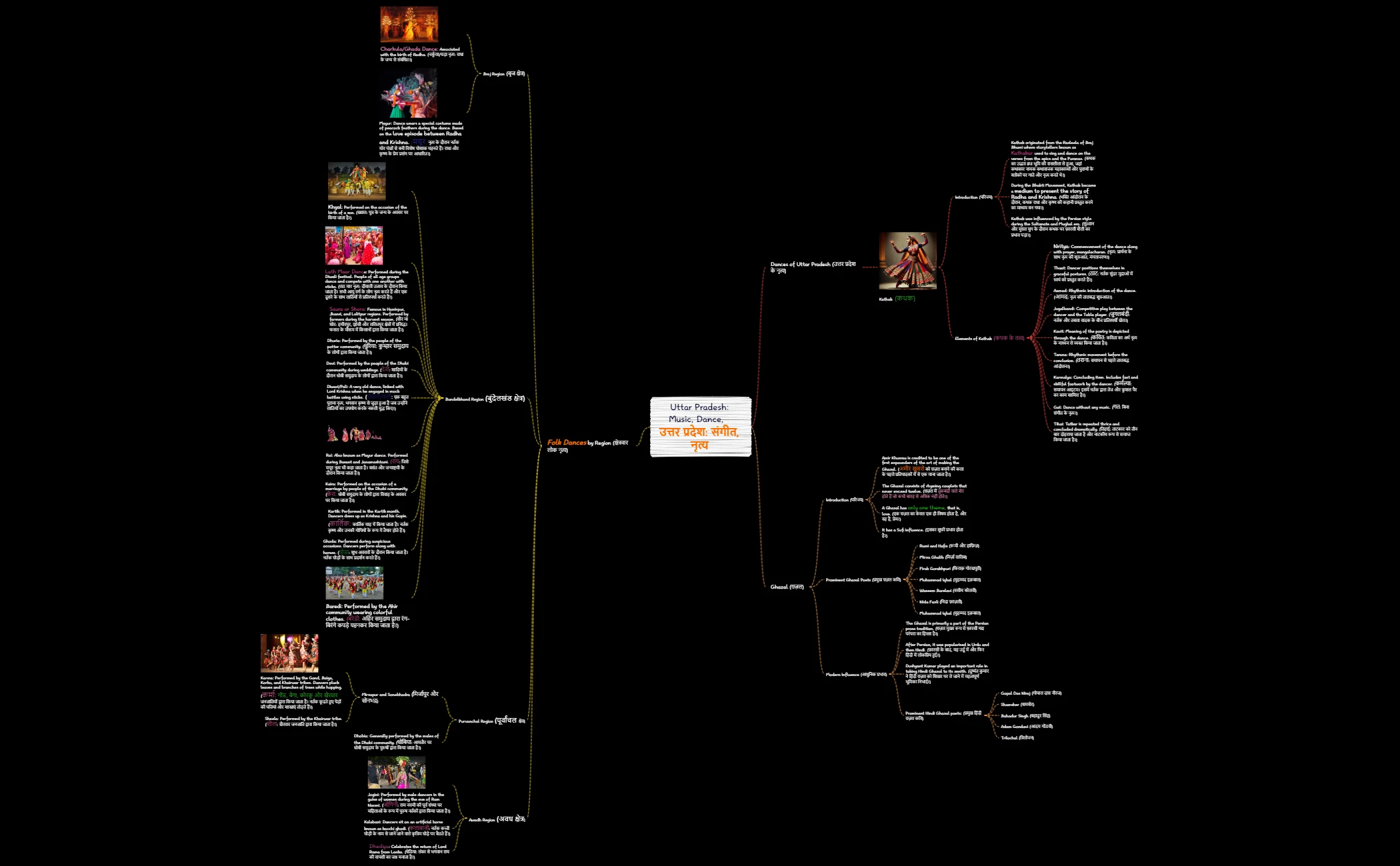
Read the branchesशाखाएँ पढ़ें
Uttar Pradesh: Music, Dance, उत्तर प्रदेश: संगीत, नृत्य
Uttar Pradesh: Music, Dance, उत्तर प्रदेश: संगीत, नृत्य
Dances of Uttar Pradesh (उत्तर प्रदेश के नृत्य)
Kathak (कथक)
Introduction (परिचय)
Kathak originated from the Rasleela of Braj Bhumi where storytellers known as Kathakar used to sing and dance on the verses from the epics and the Puranas. (कथक का उद्भव ब्रज भूमि की रासलीला से हुआ, जहां कथाकार नामक कथावाचक महाकाव्यों और पुराणों के श्लोकों पर गाते और नृत्य करते थे।)
During the Bhakti Movement, Kathak became a medium to present the story of Radha and Krishna. (भक्ति आंदोलन के दौरान, कथक राधा और कृष्ण की कहानी प्रस्तुत करने का माध्यम बन गया।)
Kathak was influenced by the Persian style during the Sultanate and Mughal era. (सुल्तान और मुग़ल युग के दौरान कथक पर फ़ारसी शैली का प्रभाव पड़ा।)
Elements of Kathak (कथक के तत्व)
Nritya: Commencement of the dance along with prayer, mangalacharan. (नृत्य: प्रार्थना के साथ नृत्य की शुरुआत, मंगलाचरण।)
Thaat: Dancer positions themselves in graceful postures. (ठाट: नर्तक सुंदर मुद्राओं में स्वयं को प्रस्तुत करते हैं।)
Aamad: Rhythmic introduction of the dance. (आमद: नृत्य की तालबद्ध शुरुआत।)
Jugalbandi: Competitive play between the dancer and the Tabla player. (जुगलबंदी: नर्तक और तबला वादक के बीच प्रतिस्पर्धी खेल।)
Kavit: Meaning of the poetry is depicted through the dance. (कवित: कविता का अर्थ नृत्य के माध्यम से व्यक्त किया जाता है।)
Tarana: Rhythmic movement before the conclusion. (तराना: समापन से पहले तालबद्ध आंदोलन।)
Karmalya: Concluding item. Includes fast and skillful footwork by the dancer. (कर्मल्या: समापन आइटम। इसमें नर्तक द्वारा तेज और कुशल पैर का काम शामिल है।)
Gat: Dance without any music. (गत: बिना संगीत के नृत्य।)
Tihai: Tatkar is repeated thrice and concluded dramatically. (तिहाई: ताटकार को तीन बार दोहराया जाता है और नाटकीय रूप से समाप्त किया जाता है।)
Ghazal (ग़ज़ल)
Introduction (परिचय)
Amir Khusrau is credited to be one of the first expounders of the art of making the Ghazal. (अमीर खुसरो को ग़ज़ल बनाने की कला के पहले प्रतिपादकों में से एक माना जाता है।)
The Ghazal consists of rhyming couplets that never exceed twelve. (ग़ज़ल में तुकबंदी वाले शेर होते हैं जो कभी बारह से अधिक नहीं होते।)
A Ghazal has only one theme, that is, love. (एक ग़ज़ल का केवल एक ही विषय होता है, और वह है, प्रेम।)
It has a Sufi influence. (इसका सूफी प्रभाव होता है।)
Prominent Ghazal Poets (प्रमुख ग़ज़ल कवि)
Rumi and Hafiz (रूमी और हाफ़िज़)
Mirza Ghalib (मिर्ज़ा ग़ालिब)
Firak Gorakhpuri (फिराक़ गोरखपुरी)
Muhammad Iqbal (मुहम्मद इक़बाल)
Waseem Barelavi (वसीम बरेलवी)
Nida Fazli (निदा फ़ाज़ली)
Muhammad Iqbal (मुहम्मद इक़बाल)
Modern Influence (आधुनिक प्रभाव)
The Ghazal is primarily a part of the Persian prose tradition. (ग़ज़ल मुख्य रूप से फ़ारसी गद्य परंपरा का हिस्सा है।)
After Persian, it was popularised in Urdu and then Hindi. (फ़ारसी के बाद, यह उर्दू में और फिर हिंदी में लोकप्रिय हुई।)
Dushyant Kumar played an important role in taking Hindi Ghazal to its zenith. (दुष्यंत कुमार ने हिंदी ग़ज़ल को शिखर पर ले जाने में महत्वपूर्ण भूमिका निभाई।)
Prominent Hindi Ghazal poets: (प्रमुख हिंदी ग़ज़ल कवि)
Gopal Das Niraj (गोपाल दास नीरज)
Shamsher (शमशेर)
Bahadur Singh (बहादुर सिंह)
Adam Gondavi (आदम गोंडवी)
Trilochal (त्रिलोचन)
Folk Dances by Region (क्षेत्रवार लोक नृत्य)
Braj Region (बृज क्षेत्र)
Charkula/Ghada Dance: Associated with the birth of Radha. (चर्कुला/घड़ा नृत्य: राधा के जन्म से संबंधित।)
Mayur: Dance wears a special costume made of peacock feathers during the dance. Based on the love episode between Radha and Krishna. (मयूर: नृत्य के दौरान नर्तक मोर पंखों से बनी विशेष पोशाक पहनते हैं। राधा और कृष्ण के प्रेम प्रसंग पर आधारित।)
Bundelkhand Region (बुंदेलखंड क्षेत्र)
Khyal: Performed on the occasion of the birth of a son. (ख्याल: पुत्र के जन्म के अवसर पर किया जाता है।)
Lath Maar Dance: Performed during the Diwali festival. People of all age groups dance and compete with one another with sticks. (लठ मार नृत्य: दीवाली उत्सव के दौरान किया जाता है। सभी आयु वर्ग के लोग नृत्य करते हैं और एक दूसरे के साथ लाठियों से प्रतिस्पर्धा करते हैं।)
Saura or Shora: Famous in Hamirpur, Jhansi, and Lalitpur regions. Performed by farmers during the harvest season. (सौर या शोर: हमीरपुर, झांसी और ललितपुर क्षेत्रों में प्रसिद्ध। फसल के मौसम में किसानों द्वारा किया जाता है।)
Dhuria: Performed by the people of the potter community. (धुरिया: कुम्हार समुदाय के लोगों द्वारा किया जाता है।)
Devi: Performed by the people of the Dhobi community during weddings. (देवी: शादियों के दौरान धोबी समुदाय के लोगों द्वारा किया जाता है।)
Diwari/Pali: A very old dance, linked with Lord Krishna when he engaged in mock battles using sticks. (दीवारी/पाली: एक बहुत पुराना नृत्य, भगवान कृष्ण से जुड़ा हुआ है जब उन्होंने लाठियों का उपयोग करके नकली युद्ध किए।)
Rai: Also known as Mayur dance. Performed during Basant and Janamashtami. (राय: जिसे मयूर नृत्य भी कहा जाता है। बसंत और जन्माष्टमी के दौरान किया जाता है।)
Kaira: Performed on the occasion of a marriage by people of the Dhobi community. (कैरा: धोबी समुदाय के लोगों द्वारा विवाह के अवसर पर किया जाता है।)
Kartik: Performed in the Kartik month. Dancers dress up as Krishna and his Gopis. (कार्तिक: कार्तिक माह में किया जाता है। नर्तक कृष्ण और उनकी गोपियों के रूप में तैयार होते हैं।)
Ghoda: Performed during auspicious occasions. Dancers perform along with horses. (घोड़ा: शुभ अवसरों के दौरान किया जाता है। नर्तक घोड़ों के साथ प्रदर्शन करते हैं।)
Baredi: Performed by the Ahir community wearing colorful clothes. (बरेडी: अहिर समुदाय द्वारा रंग-बिरंगे कपड़े पहनकर किया जाता है।)
Purvanchal Region (पूर्वांचल क्षेत्र)
Mirzapur and Sonebhadra (मिर्जापुर और सोनभद्र)
Karma: Performed by the Gond, Baiga, Korku, and Khairwar tribes. Dancers pluck leaves and branches of trees while hopping. (कर्मा: गोंड, बैगा, कोरकू और खैरवार जनजातियों द्वारा किया जाता है। नर्तक कूदते हुए पेड़ों की पत्तियां और शाखाएं तोड़ते हैं।)
Sheela: Performed by the Khairwar tribe. (शीला: खैरवार जनजाति द्वारा किया जाता है।)
Dhobia: Generally performed by the males of the Dhobi community. (धोबिया: आमतौर पर धोबी समुदाय के पुरुषों द्वारा किया जाता है।)
Awadh Region (अवध क्षेत्र)
Jogini: Performed by male dancers in the guise of women during the eve of Ram Navmi. (जोगिनी: राम नवमी की पूर्व संध्या पर महिलाओं के रूप में पुरुष नर्तकों द्वारा किया जाता है।)
Kalabazi: Dancers sit on an artificial horse known as kacchi ghodi. (कलाबाजी: नर्तक कच्ची घोड़ी के नाम से जाने जाने वाले कृत्रिम घोड़े पर बैठते हैं।)
Dhediya: Celebrates the return of Lord Rama from Lanka. (धेडिया: लंका से भगवान राम की वापसी का जश्न मनाता है।)