Mind Mapsमाइंड मैप्स › Ancient Historyप्राचीन इतिहास
PYQs - rigveda — mind mapमाइंड मैप
Original study maps by Rishabh Singh. Read dated facts in their exam-year context. Sources & corrections.ऋषभ सिंह के मूल अध्ययन मानचित्र। पुराने तथ्यों को संबंधित परीक्षा वर्ष के संदर्भ में पढ़ें। स्रोत और सुधार।
72 branches and entriesशाखाएँ और बिंदु · 1 sheet(s)शीट
See the original map layoutमूल मानचित्र का स्वरूप देखें
Tap the image to open its full preview. Read individual branches below for comfortable revision.पूरा पूर्वावलोकन खोलने के लिए चित्र पर टैप करें। आसानी से पढ़ने के लिए नीचे शाखाएँ देखें।
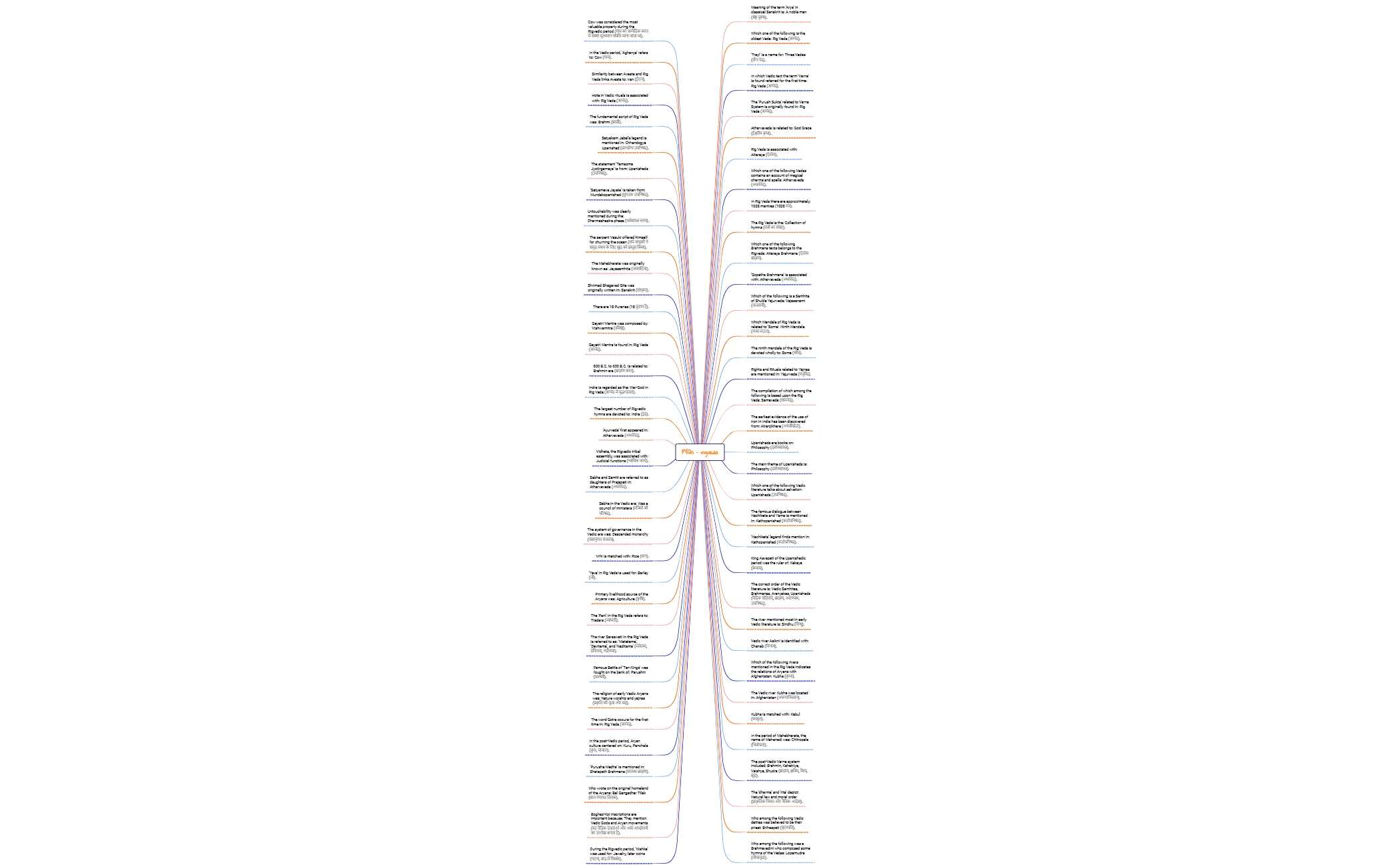
Read the branchesशाखाएँ पढ़ें
PYQs - rigveda
PYQs - rigveda
Meaning of the term 'Arya' in classical Sanskrit is: A noble man (श्रेष्ठ पुरुष).
Which one of the following is the oldest Veda: Rig Veda (ऋग्वेद).
'Trayi' is a name for: Three Vedas (तीन वेद).
In which Vedic text the term 'Varna' is found referred for the first time: Rig Veda (ऋग्वेद).
The 'Purush Sukta' related to Varna System is originally found in: Rig Veda (ऋग्वेद).
Atharvaveda is related to: God Grace (ईश्वरीय कृपा).
Rig Veda is associated with: Aitareya (ऐतरेय).
Which one of the following Vedas contains an account of magical charms and spells: Atharvaveda (अथर्ववेद).
In Rig Veda there are approximately: 1028 mantras (1028 मंत्र).
The Rig Veda is the: Collection of hymns (मंत्रों का संग्रह).
Which one of the following Brahmana texts belongs to the Rigveda: Aitareya Brahmana (ऐतरेय ब्राह्मण).
'Gopatha Brahmana' is associated with: Atharvaveda (अथर्ववेद).
Which of the following is a Samhita of Shukla Yajurveda: Vajasanami (वाजसनी).
Which Mandala of Rig Veda is related to 'Soma': Ninth Mandala (नवम मंडल).
The ninth mandala of the Rig Veda is devoted wholly to: Soma (सोम).
Rights and Rituals related to Yajnas are mentioned in: Yajurveda (यजुर्वेद).
The compilation of which among the following is based upon the Rig Veda: Samaveda (सामवेद).
The earliest evidence of the use of iron in India has been discovered from: Atranjikhera (अत्रंजीखेड़ा).
Upanishads are books on: Philosophy (दर्शनशास्त्र).
The main theme of Upanishads is: Philosophy (दर्शनशास्त्र).
Which one of the following Vedic literature talks about salvation: Upanishads (उपनिषद).
The famous dialogue between Nachiketa and Yama is mentioned in: Kathopanishad (कठोपनिषद).
'Nachiketa' legend finds mention in: Kathopanishad (कठोपनिषद).
King Asvapati of the Upanishadic period was the ruler of: Kekaya (केकय).
The correct order of the Vedic literature is: Vedic Samhitas, Brahmanas, Aranyakas, Upanishads (वैदिक संहिताएं, ब्राह्मण, आरण्यक, उपनिषद).
The river mentioned most in early Vedic literature is: Sindhu (सिन्धु).
Vedic river Asikni is identified with: Chenab (चिनाब).
Which of the following rivers mentioned in the Rig Veda indicates the relations of Aryans with Afghanistan: Kubha (कुभा).
The Vedic river Kubha was located in: Afghanistan (अफगानिस्तान).
Kubha is matched with: Kabul (काबुल).
In the period of Mahabharata, the name of Mahanadi was: Chitropala (चित्रोपला).
The post-Vedic Varna system included: Brahmin, Kshatriya, Vaishya, Shudra (ब्राह्मण, क्षत्रिय, वैश्य, शूद्र).
The 'dharma' and 'rita' depict: Natural law and moral order (प्राकृतिक नियम और नैतिक आदेश).
Who among the following Vedic deities was believed to be their priest: Brihaspati (बृहस्पति).
Who among the following was a Brahmavadini who composed some hymns of the Vedas: Lopamudra (लोपामुद्रा).
During the Rigvedic period, 'Nishka' was used for: Jewelry, later coins (गहना, बाद में सिक्के).
Boghaz-Koi inscriptions are important because: They mention Vedic Gods and Aryan movements (यह वैदिक देवताओं और आर्य आन्दोलनों का उल्लेख करता है).
Who wrote on the original homeland of the Aryans: Bal Gangadhar Tilak (बाल गंगाधर तिलक).
'Purusha Medha' is mentioned in: Shatapath Brahmana (शतपथ ब्राह्मण).
In the post-Vedic period, Aryan culture centered on: Kuru, Panchala (कुरु, पांचाल).
The word Gotra occurs for the first time in: Rig Veda (ऋग्वेद).
The religion of early Vedic Aryans was: Nature worship and yajnas (प्रकृति की पूजा और यज्ञ).
Famous Battle of 'Ten Kings' was fought on the bank of: Parushni (परुष्णी).
The river Saraswati in the Rig Veda is referred to as: 'Matetama', 'Devitama', and 'Naditama' (मतेतमा, देवितमा, नदीतमा).
The 'Pani' in the Rig Veda refers to: Traders (व्यापारी).
Primary livelihood source of the Aryans was: Agriculture (कृषि).
'Yava' in Rig Veda is used for: Barley (जौ).
Vrhi is matched with: Rice (धान).
The system of governance in the Vedic era was: Descended monarchy (वंशानुगत राजतंत्र).
Sabha in the Vedic era: Was a council of ministers (मंत्रियों की परिषद).
Sabha and Samiti are referred to as daughters of Prajapati in: Atharvaveda (अथर्ववेद).
Vidhata, the Rigvedic tribal assembly, was associated with: Judicial functions (न्यायिक कार्य).
'Ayurveda' first appeared in: Atharvaveda (अथर्ववेद).
The largest number of Rigvedic hymns are devoted to: Indra (इंद्र).
Indra is regarded as the: War-God in Rig Veda (ऋग्वेद में युद्ध-देवता).
800 B.C. to 600 B.C. is related to: Brahmin era (ब्राह्मण काल).
Gayatri Mantra is found in: Rig Veda (ऋग्वेद).
Gayatri Mantra was composed by: Vishwamitra (वशिष्ठ).
There are 18 Puranas (18 पुराण हैं).
Shrimad Bhagavad Gita was originally written in: Sanskrit (संस्कृत).
The Mahabharata was originally known as: Jayasamhita (जयसंहिता).
The serpent Vasuki offered himself for churning the ocean (सर्प वासुकी ने समुद्र मंथन के लिए खुद को प्रस्तुत किया).
Untouchability was clearly mentioned during the: Dharmashastra phase (धर्मशास्त्र चरण).
'Satyameva Jayate' is taken from: Mundakopanishad (मुण्डक उपनिषद).
The statement 'Tamsoma Jyotirgamaya' is from: Upanishads (उपनिषद).
Satyakam Jabal's legend is mentioned in: Chhandogya Upanishad (छान्दोग्य उपनिषद).
The fundamental script of Rig Veda was: Brahmi (ब्राह्मी).
Hota in Vedic rituals is associated with: Rig Veda (ऋग्वेद).
Similarity between Avesta and Rig Veda links Avesta to: Iran (ईरान).
In the Vedic period, 'Aghanya' refers to: Cow (गाय).
Cow was considered the most valuable property during the Rigvedic period (गाय को ऋग्वैदिक काल में सबसे मूल्यवान संपत्ति माना जाता था).