Mind Mapsमाइंड मैप्स › Ancient Historyप्राचीन इतिहास
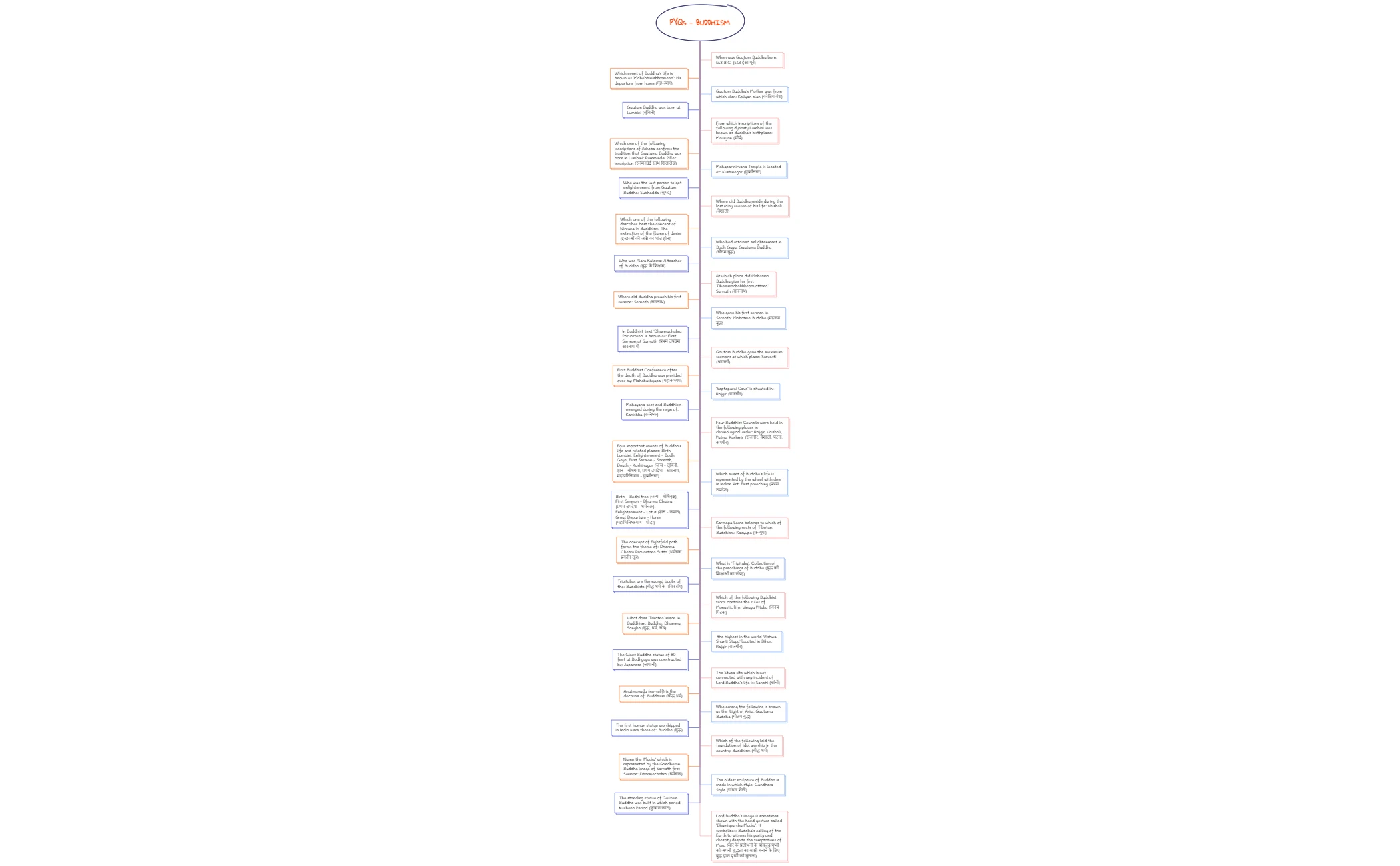
PYQs - BUDDHISM — mind mapमाइंड मैप
Original study maps by Rishabh Singh. Read dated facts in their exam-year context. Sources & corrections.ऋषभ सिंह के मूल अध्ययन मानचित्र। पुराने तथ्यों को संबंधित परीक्षा वर्ष के संदर्भ में पढ़ें। स्रोत और सुधार।
42 branches and entriesशाखाएँ और बिंदु · 1 sheet(s)शीट
See the original map layoutमूल मानचित्र का स्वरूप देखें
Tap the image to open its full preview. Read individual branches below for comfortable revision.पूरा पूर्वावलोकन खोलने के लिए चित्र पर टैप करें। आसानी से पढ़ने के लिए नीचे शाखाएँ देखें।
Read the branchesशाखाएँ पढ़ें
PYQs - BUDDHISM
PYQs - BUDDHISM
When was Gautam Buddha born: 563 B.C. (563 ईसा पूर्व)
Which event of Buddha’s life is known as 'Mahabhinishkramana': His departure from home (गृह-त्याग)
Gautam Buddha’s Mother was from which clan: Koliyan clan (कोलिय वंश)
Gautam Buddha was born at: Lumbini (लुंबिनी)
From which inscriptions of the following dynasty Lumbini was known as Buddha’s birthplace: Mauryan (मौर्य)
Which one of the following inscriptions of Ashoka confirms the tradition that Gautama Buddha was born in Lumbini: Rummindei Pillar Inscription (रूमिनदेई स्तंभ शिलालेख)
Mahaparinirvana Temple is located at: Kushinagar (कुशीनगर)
Who was the last person to get enlightenment from Gautam Buddha: Subhadda (सुभद्द)
Where did Buddha reside during the last rainy season of his life: Vaishali (वैशाली)
Which one of the following describes best the concept of Nirvana in Buddhism: The extinction of the flame of desire (इच्छाओं की अग्नि का शांत होना)
Who had attained enlightenment in Bodh Gaya: Gautama Buddha (गौतम बुद्ध)
Who was Alara Kalama: A teacher of Buddha (बुद्ध के शिक्षक)
At which place did Mahatma Buddha give his first ‘Dhammachakkhapavattana’: Sarnath (सारनाथ)
Where did Buddha preach his first sermon: Sarnath (सारनाथ)
Who gave his first sermon in Sarnath: Mahatma Buddha (महात्मा बुद्ध)
In Buddhist text ‘Dharmachakra Parvartana’ is known as: First Sermon at Sarnath (प्रथम उपदेश सारनाथ में)
Gautam Buddha gave the maximum sermons at which place: Sravasti (श्रावस्ती)
First Buddhist Conference after the death of Buddha was presided over by: Mahakashyapa (महाकश्यप)
‘Saptaparni Cave’ is situated in: Rajgir (राजगीर)
Mahayana sect and Buddhism emerged during the reign of: Kanishka (कनिष्क)
Four Buddhist Councils were held in the following places in chronological order: Rajgir, Vaishali, Patna, Kashmir (राजगीर, वैशाली, पटना, कश्मीर)
Four important events of Buddha’s life and related places: Birth - Lumbini, Enlightenment - Bodh Gaya, First Sermon - Sarnath, Death - Kushinagar (जन्म - लुंबिनी, ज्ञान - बोधगया, प्रथम उपदेश - सारनाथ, महापरिनिर्वाण - कुशीनगर)
Which event of Buddha’s life is represented by the wheel with deer in Indian Art: First preaching (प्रथम उपदेश)
Birth - Bodhi tree (जन्म - बोधिवृक्ष), First Sermon - Dharma Chakra (प्रथम उपदेश - धर्मचक्र), Enlightenment - Lotus (ज्ञान - कमल), Great Departure - Horse (महाभिनिष्क्रमण - घोड़ा)
Karmapa Lama belongs to which of the following sects of Tibetan Buddhism: Kagyupa (कग्युपा)
The concept of Eightfold path forms the theme of: Dharma Chakra Pravartana Sutta (धर्मचक्र प्रवर्तन सूत्र)
What is ‘Tripitaka’: Collection of the preachings of Buddha (बुद्ध की शिक्षाओं का संग्रह)
Tripitakas are the sacred books of the: Buddhists (बौद्ध धर्म के पवित्र ग्रंथ)
Which of the following Buddhist texts contains the rules of Monastic life: Vinaya Pitaka (विनय पिटक)
What does ‘Triratna’ mean in Buddhism: Buddha, Dhamma, Sangha (बुद्ध, धर्म, संघ)
the highest in the world ‘Vishwa Shanti Stupa’ located in Bihar: Rajgir (राजगीर)
The Giant Buddha statue of 80 feet at Bodhgaya was constructed by: Japanese (जापानी)
The Stupa site which is not connected with any incident of Lord Buddha’s life is: Sanchi (सांची)
Anatmavada (no-self) is the doctrine of: Buddhism (बौद्ध धर्म)
Who among the following is known as the ‘Light of Asia’: Gautama Buddha (गौतम बुद्ध)
The first human statue worshipped in India were those of: Buddha (बुद्ध)
Which of the following laid the foundation of idol worship in the country: Buddhism (बौद्ध धर्म)
Name the ‘Mudra’ which is represented by the Gandharan Buddha image of Sarnath first Sermon: Dharmachakra (धर्मचक्र)
The oldest sculpture of Buddha is made in which style: Gandhara Style (गांधार शैली)
The standing statue of Gautam Buddha was built in which period: Kushana Period (कुषाण काल)
Lord Buddha’s image is sometimes shown with the hand gesture called 'Bhumisparsha Mudra'. It symbolizes: Buddha’s calling of the Earth to witness his purity and chastity despite the temptations of Mara (मार के प्रलोभनों के बावजूद पृथ्वी को अपनी शुद्धता का साक्षी बनाने के लिए बुद्ध द्वारा पृथ्वी को बुलाना)