Home › Mains › Environment › Biodiversity

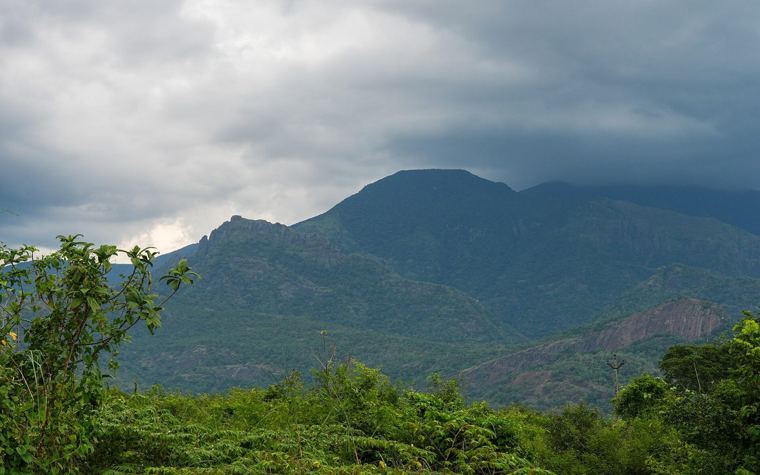
Forest-covered Western Ghats, one of India's biodiversity hotspots
GS III · Environment

Biodiversity

One topic spine, adapted to every question demand.

Syllabus: Conservation, environmental pollution and degradation; environmental impact assessment.

The invariant

Biodiversity is not a list of species. It is variability across genes, species and ecosystems that gives ecological systems functional options, redundancy and resilience.

(प्रजातियों की गिनती नहीं; प्रकृति की बदलाव सहने की क्षमता।)

Common spine

Use the shared causal spine first. Then select a real PYQ to see how the same material must be reweighted.

Demand: Topic mastery

Scope: All verified biodiversity demands

ExpandUse brieflyUsually omit
01

Concept anchor (मूल परिभाषा)

Genetic diversity → Species diversity → Ecosystem diversity

Define biodiversity as variability at three nested levels. This prevents the answer from collapsing into a species list.

Biodiversity = variability, not merely abundance.

Core
02

Why diversity matters (विविधता क्यों जरूरी)

Different ecological roles → functional complementarity + redundancy → stability → resilience

Explain the mechanism: when conditions change or one component fails, diversity leaves alternative pathways for ecosystem functions to continue.

Diversity is ecological insurance.

Core
03

Indian variation (भारतीय विविधता)

Relief + climate + isolation + habitat range → biogeographic variation → endemism + hotspots

Organise Indian variation by geography and ecosystem, not by random examples. Add hotspots, endemism and livelihood dependence as proof.

Variation follows ecological gradients.

Core
04

Drivers of degeneration (क्षय के कारण)

Land-use change → habitat loss/fragmentation → smaller, isolated populations → genetic and species loss

Lead with habitat conversion and fragmentation; then add overexploitation, invasive species, pollution and climate change as interacting pressures.

Loss is cumulative, interacting and often irreversible.

Core
05

Consequences (परिणाम)

Diversity loss → resilience down → ecosystem services weaken → livelihood, food, water and health risks rise

Carry the answer from ecological effects to human consequences. This converts an environment answer into a GS-3 answer.

Ecological loss becomes developmental vulnerability.

Core
06

Response architecture (संरक्षण ढाँचा)

In-situ + ex-situ → landscape connectivity → community institutions → access-benefit sharing → mainstreaming

Use a layered response: protected habitats, restoration and corridors; local stewardship; BDA institutions and benefit sharing; biodiversity safeguards in development.

Conservation must work inside lived landscapes, not only inside fences.

Core
07

Judgement (निष्कर्ष)

Species protection alone < ecosystem integrity + equitable governance + development choices

Close with a judgement that follows from the question. Do not repeat the body or add a decorative quotation.

Protect variability, function and the people who sustain both.

Core

Value-addition bank

ConceptGenetic · species · ecosystem diversity
Spatial proofBiogeographic zones · hotspots · endemism
InstitutionsNBA · State Biodiversity Boards · Biodiversity Management Committees
Local instrumentPeople's Biodiversity Registers
Governance principleConservation · sustainable use · fair benefit sharing

Use the question's demand to decide which parts of the spine deserve space in your answer.

All Environment skeletonsReport a gap